HUNTER EYES TEST
Upload a selfie. AI scores your eye area across 5 structural traits — canthal tilt, lid exposure, socket depth, almond ratio, brow distance — and returns a 0-100 hunter score plus a verdict.
Best results: front-facing, no glasses, hair off forehead. Photo isn't stored.
The 5 Hunter Eye Components
Hunter eyes is not one trait — it's a structural combination. We score each component separately and compose your overall score.
Outer eye corner relative to inner. Hunter = positive (outer higher).
How much upper eyelid is visible. Hunter = minimal (heavy hooding).
Eyes recessed vs. protruding. Hunter = deep-set.
Eye shape. Hunter = horizontal almond. Prey = round.
How close the brow sits to the eye. Hunter = low brow ridge.
The Hunter / Prey Spectrum
Five tiers based on your overall 0-100 hunter score. Most men land in "mixed." Full hunter is rare.
Hunter score: 80+
You have the full hunter-eye structural combination — positive canthal tilt, minimal upper-lid exposure (heavy hooding), deep-set eyes recessed under a low brow ridge, almond shape, and a tight brow-to-eye distance.
Hunter score: 65-79
You have most of the hunter-eye structural traits but at least one component is holding you back from full hunter status.
Hunter score: 45-64
Your eye area sits in the middle of the hunter / prey spectrum — some hunter traits, some prey traits, no dominant pattern.
Hunter score: 30-44
Your eye area leans toward the prey end of the spectrum — likely some combination of high upper-lid exposure (open, doll-like), a higher arched brow, and/or rounder eye shape.
Hunter score: ≤ 29
Your eye area sits firmly on the prey end — high upper-lid exposure, round-leaning shape, neutral or negative canthal tilt, and a higher / wider brow-to-eye distance.
Hunter Eyes In Real Faces
Reference examples across the spectrum. Look at all five components together — not just one.

Tom Hardy
Canonical hunter-eyes reference. Heavy hooding, deep-set eyes under a dominant brow ridge, almond shape, low brow-to-eye distance. His canthal tilt is actually slight negative — proof that hunter eyes are the *combination* of all five components.
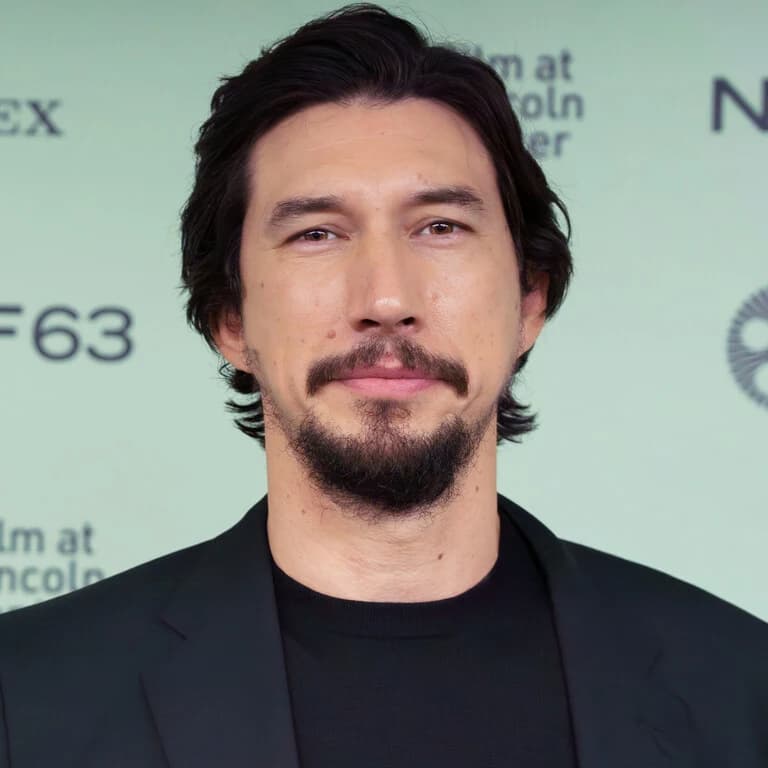
Adam Driver
Deep-set eyes under a strong brow ridge with tight brow-to-eye distance. Canthal tilt is roughly neutral, which keeps him just below textbook hunter — but the overall read is clearly in the hunter-adjacent zone.
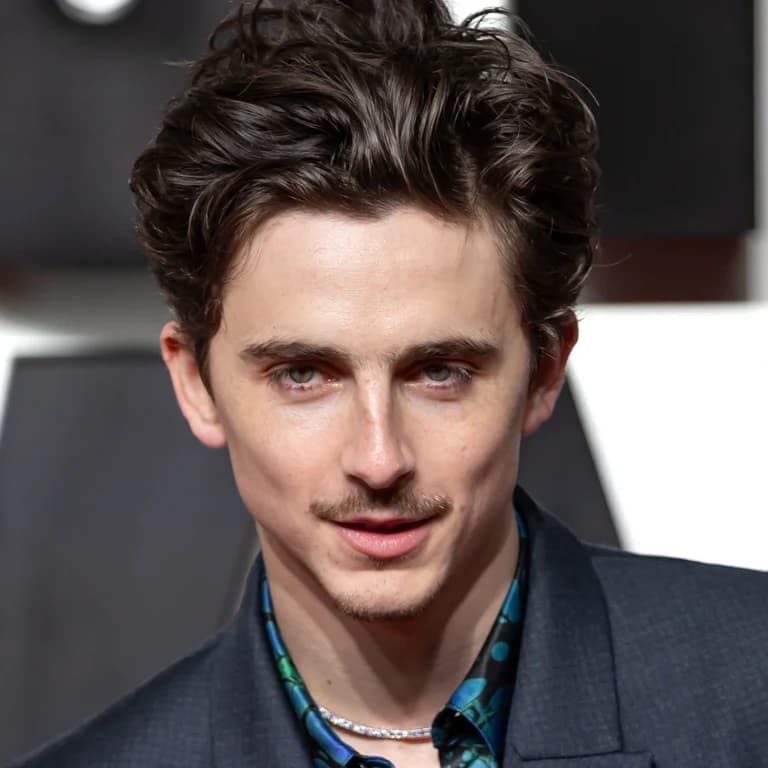
Timothée Chalamet
The most-cited prey-eyes reference. Round-leaning shape, high upper-lid exposure, neutral canthal tilt, higher-arched brow. Also one of the most successful leading men of his generation — which is the point: prey eyes are a different visual identity, not a defect.
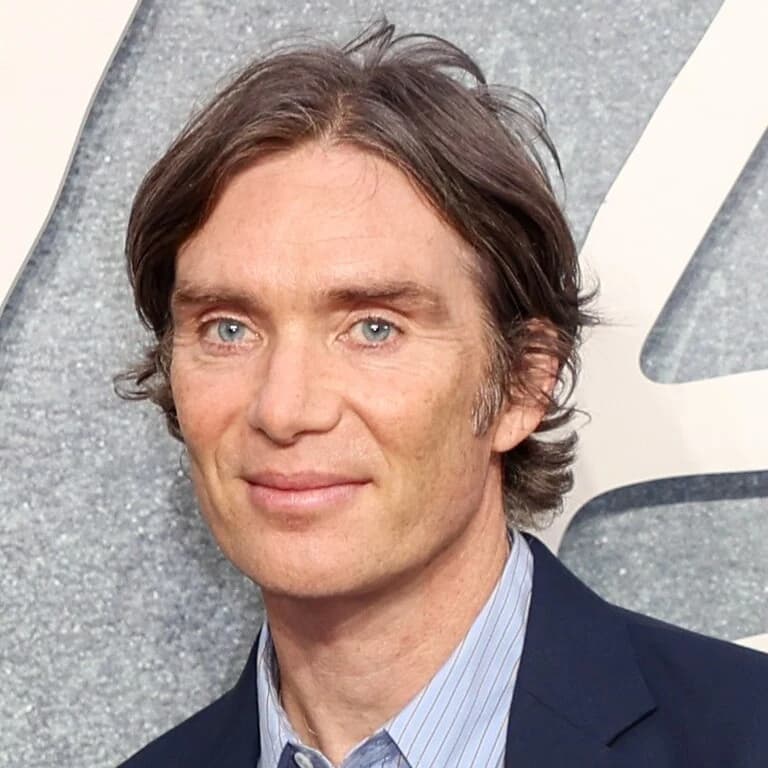
Cillian Murphy — Why Most People Get Hunter Eyes Wrong
Cillian Murphy is universally cited as the textbook hunter eyes example. By the five-component definition, he's actually mixed. His canthal tilt is genuinely positive — he aces that component (and we feature him as the positive-tilt reference on our Canthal Tilt Test). His eyes also read as deep-set thanks to a strong brow ridge. But the remaining components are weaker: his upper-lid exposure is high (you can clearly see the lid crease), his eye shape leans round, and his brow-to-eye distance is wider than the hunter ideal.
What sells the look is his striking ice-blue eye color, the dark hair-skin contrast around the eyes, and his overall bone structure. The looksmax community uses him as the canonical case study: color, contrast, and surrounding bone structure can compensate for prey-leaning eye area structure. If your eye color is striking, you can read as "hunter" despite the structural breakdown saying otherwise.
Tom Hardy © Gage Skidmore (CC BY-SA 3.0). Adam Driver © Colleen Sturtevant (CC BY-SA 4.0). Cillian Murphy © Netflix (CC BY-SA 4.0). Timothée Chalamet © Amy Martin Photography (CC BY 4.0).
How The Hunter Eyes Test Works
Front-facing selfie, eyes open and visible. No glasses, hair off the forehead, neutral expression. Even lighting — strong shadows distort eye-area structure reads.
AI scores canthal tilt, upper-lid exposure, socket depth, almond ratio, and brow-to-eye distance — each on a 0-10 scale. These are the five structural traits the looksmax community uses to define hunter eyes.
Your five component scores combine into a 0-100 hunter score and one of five verdicts (hunter / hunter-leaning / mixed / prey-leaning / prey), plus an honest read on what (if anything) you can do about it.
Tips For An Accurate Read
Eye-area structure is sensitive to head angle and lighting. Here's how to get the cleanest measurement.
Hold the phone at eye level with the lens straight at you. Tilting up exaggerates the deep-set look (false hunter); tilting down flattens it (false prey). Head straight, no chin lift.
Glasses obscure the lateral canthus and brow line. Hair across the brow shifts the apparent brow-to-eye distance. Both significantly reduce accuracy across multiple components.
Window light is best. Avoid overhead lighting (creates orbital shadows that artificially deepen the socket read) and direct flash (washes out the brow ridge).
Don't squint, don't smile hard, don't raise your brows. Active expressions change all five components — squinting fakes hunter eyes, raised brows fake prey eyes.
What Are Hunter Eyes, Exactly?
Hunter eyes is a looksmaxxing-community term describing a specific eye-area structure. It's the visual opposite of "prey eyes" (round, open, doll-like). The term comes from the visual signal hunter eyes carry — alert, predatory, focused — versus the soft / approachable read of prey eyes.
By the consensus community definition, hunter eyes is the combination of five structural components:
- 1.Positive canthal tilt — outer eye corner sits above inner corner. Roughly +3° or more.
- 2.Minimal upper-lid exposure — heavy hooding, lid crease hidden or barely visible.
- 3.Deep-set / recessed eyes — eyes sit behind a forward-projecting brow ridge.
- 4.Almond eye shape — horizontally elongated, narrow vertically, ~3:1 width-to-height ratio.
- 5.Low brow-to-eye distance — brow sits close to the eye, not high and arched.
All five are largely fixed by your bone structure and eye-socket anatomy. They're set by your early 20s and don't change with mewing, eye exercises, or facial massage. Structural change requires surgery — canthoplasty (lifts lateral canthus), blepharoplasty (reduces lid exposure), brow bone augmentation (creates the recessed look), or upper-lid fat grafting.
Non-surgically, you can shift visual perception meaningfully through brow density and shape, body fat (orbital socket definition), sleep / hydration (lid puffiness), and grooming choices. Don't expect a 30-point hunter-score swing without surgery — but a 5-10 point shift is realistic.
FAQ
How does the Hunter Eyes Test work?+
Upload or snap a clear front-facing selfie. AI scores five structural components of your eye area on a 0-10 scale: canthal tilt (outer corner relative to inner), upper-lid exposure (how much eyelid is visible), socket depth (deep-set vs. protruding), almond ratio (horizontal vs. round eye shape), and brow-to-eye distance (low brow vs. high brow). The five scores combine into a 0-100 hunter score and a verdict on the hunter / prey spectrum.
What are hunter eyes, exactly?+
Hunter eyes is a looksmaxxing-community term for a specific eye-area structure: positive canthal tilt + minimal upper-lid exposure (heavy hooding) + deep-set / recessed eyes under a prominent brow ridge + horizontally-almond eye shape + a low brow that sits close to the eye. The combination produces an alert, predatory, masculine read. The opposite is 'prey eyes' — round, open, neutral or negative tilt.
Are hunter eyes actually attractive, or is it just a meme?+
It's both. Attractiveness research consistently finds that masculine, alert, structurally-recessed eye area reads as more attractive in men. But it's also one feature of many — extremely attractive men with prey-leaning eyes (Timothée Chalamet, Robert Pattinson, Brad Pitt) prove that hunter eyes are not required for an attractive face. Treat the hunter-eye score as a single data point, not a verdict on your face.
Can I get hunter eyes without surgery?+
You can shift the visual perception meaningfully but you can't change the underlying bone or tendon structure. Non-surgical levers: low body fat (sharpens orbital socket, reduces lid puffiness), brow density and lowering (single biggest visual lever), sleep and hydration (reduces lid puffiness), and grooming choices that don't accentuate openness. Structural change requires surgery — canthoplasty, blepharoplasty, brow bone augmentation, or upper-lid fat grafting depending on which component is the gap.
Why is Cillian Murphy on the prey-leaning result page when everyone says he has hunter eyes?+
Because hunter eyes requires the FULL 5-component combination, and Murphy only nails 1-2 of them. His canthal tilt is genuinely positive — that's exactly why he's our reference celebrity for the positive-tilt result on the Canthal Tilt Test. His eyes also read as deep-set thanks to a strong brow ridge. But the remaining components are weak: high upper-lid exposure (no real hooding), round-leaning eye shape, and a wider brow-to-eye distance. What sells his eye area as 'hunter eyes' to most people is the striking blue eye color, dark surrounding contrast, and overall bone structure — all compensating for the components that don't aggregate to hunter. The looksmax community uses Murphy as the canonical example of color/halo compensating for incomplete hunter structure.
How accurate is this test?+
Best for directional reads on a clean photo. AI estimates from a 2D image are sensitive to head angle, lighting, and which eye is more visible — small head tilts can shift component scores by 1-2 points. The verdict (hunter / hunter-leaning / mixed / prey-leaning / prey) is much more stable than the exact 0-100 score. For most reliable results, take 2-3 photos at slightly different angles and average them.
Hunter eyes vs hooded eyes — what's the difference?+
Hooded eyes is just one component of hunter eyes (the upper-lid exposure trait). You can have hooded eyes with neutral or negative canthal tilt and round eye shape — that's not hunter eyes, that's just hooded. Hunter eyes require the full structural combination: positive tilt + hooding + deep-set + almond + low brow.
Is my photo stored?+
Your photo is processed for the duration of one analysis request only. We don't store, share, or train on your image. After the result is returned, the image data is discarded. The result you see is just numeric scores — no image data persists on our side.