Is Your Forehead Too Big?
Find out in 60 seconds. AI measures your forehead against the classical facial-thirds rule and tells you exactly where you fall — plus the haircut and styling levers that fix it.
Photo discarded immediately after scoring. No signup. No data stored.
The 3 Classifications
What each classification means — and what to do about it.
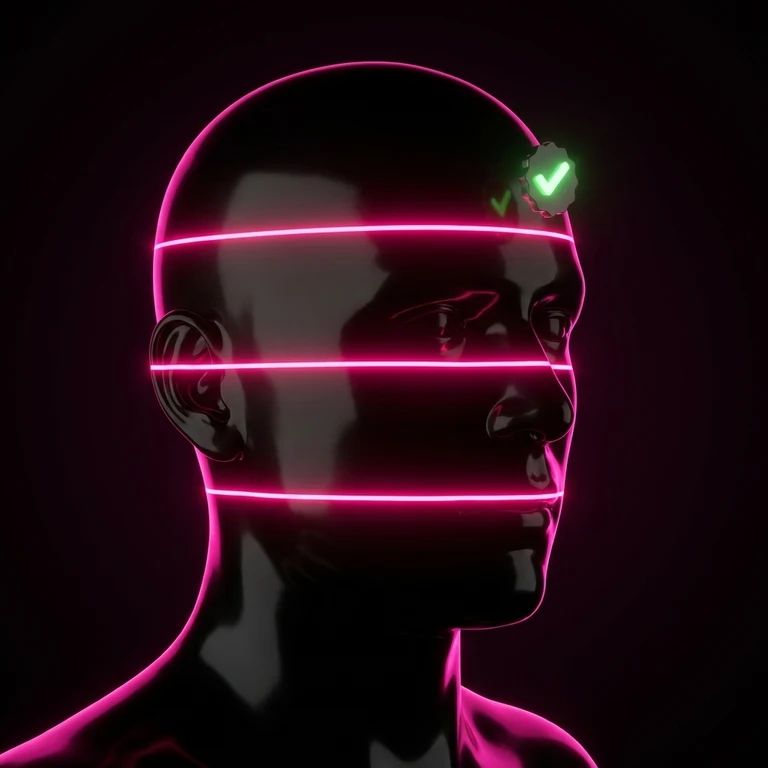
Your forehead sits within the classical facial-thirds canon — roughly equal to the midface and lower-face regions.
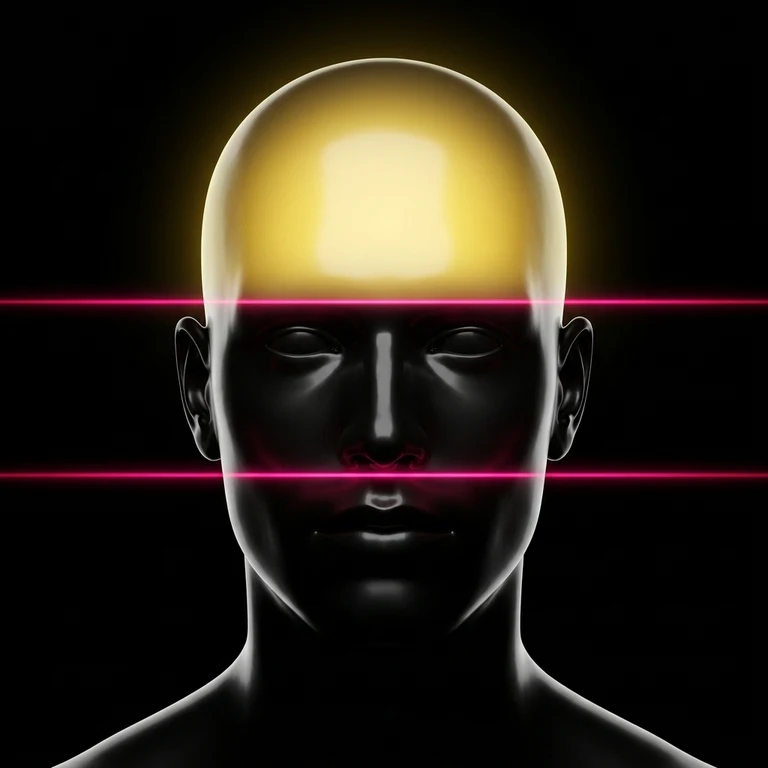
Your forehead is slightly above the classical-thirds baseline — taller than the midface or lower-face regions.
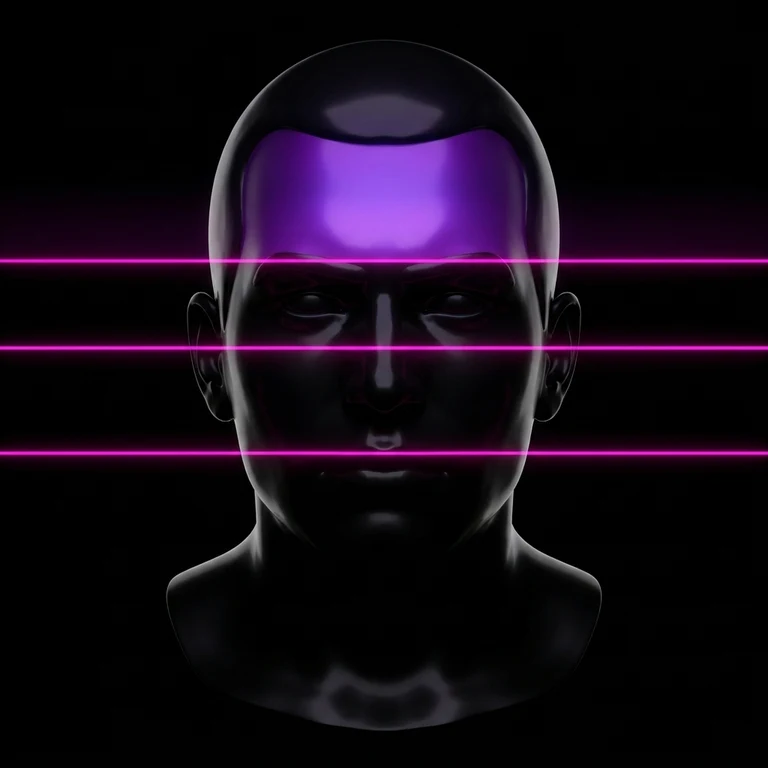
Your forehead is shorter than the classical-thirds baseline — the midface and lower-face regions take up proportionally more of the face.
How The Test Works
468 facial landmark points detected via Google's MediaPipe Face Landmarker. The model finds your hairline accurately even when partial fringe or styling obscures part of it.
Three vertical sections measured: forehead (hairline → brow ridge), midface (brow → base of nose), lower face (base of nose → chin). Each expressed as a percentage of total facial height.
Compare your forehead percentage to the classical canon (30-35%). Output: balanced / tall / compact + harmony score 30-100 reflecting how close to the 33% ideal.
For Best Results
Photo conditions that move the accuracy from ±5% down to ±2%.
Camera at chin height or above. Below-eye-line shots distort facial thirds — the lower face appears compressed and the forehead appears taller than it actually is.
Heavy forward fringes obscure the actual hairline. If you style forward, pull the hair back temporarily for the photo. The AI estimates underneath but accuracy drops the more it's covered.
Raised eyebrows pull the brow line up and shrink the visible forehead by 1-2%. Front-angled soft light shows the actual hairline cleanly. Avoid backlight that puts the head in silhouette.
Anything covering the hairline forces the model to estimate. If you're testing for hairstyle decisions, take the photo with the hairline visible — you can compare to the styled look separately.
Not Happy With Your Result?
Forehead ratio is one of the most fixable facial proportions — the structural number rarely matches the visual one once styling is dialed in. Three things to consider:
- •Tall classification: Almost entirely fixable with the right cut. Forward-textured fringes shrink the visible forehead 20-30%, beards add visual weight downward, fuller brows close the brow-to-hairline gap. Try two hairstyles, re-scan, compare.
- •Compact classification: Less common but easy to lean into — slick-backs, pompadours, modern quiffs all expose more of the upper face and visually extend the forehead. Avoid heavy fringes or front textures that shrink it further.
- •Either extreme: Don't fixate on this one metric. Forehead ratio is a sub-component of Harmony (~5-10% of total PSL score). The Mogged full scan tells you which of the 4 PSL categories is actually dragging you — usually it's not this one.
FAQ
How is forehead ratio measured?+
Forehead ratio is measured against the classical facial-thirds rule — the face is divided into three vertical sections (forehead, midface, lower face), each ideally ~33% of total facial height. Your forehead is measured from the hairline to the brow ridge, then expressed as a percentage of total facial height. The AI uses landmark detection on 468 facial points to find the hairline accurately even when partially obscured.
Is having a big forehead bad?+
No. About 35% of men fall into the 'tall forehead' classification — including many high-PSL faces (Justin Timberlake, Cillian Murphy, plenty of fashion models). Forehead proportion is one of 4 PSL categories and weights ~5-10% of the overall score. It's also one of the most fixable proportions through hairstyling alone, so even if you classify as tall, the visible result is almost entirely under your control.
What's the ideal forehead ratio?+
The classical canon says ~33% — equal to the midface and lower face. In practice, the 30-35% range reads as balanced. Below 30% reads as compact (less common, often read as youthful or boyish). Above 35% reads as tall (most common variation, very fixable with hairstyling). 'Ideal' depends heavily on overall face shape — a 32% forehead on an oval face reads different than the same 32% on a square face.
Can I fix a big forehead without surgery?+
Yes — most tall foreheads are fully addressable with the right hairstyle. Forward-textured fringes, soft side-swept cuts, or shorter top-heavy styles can shrink the visible forehead by 20-30%. Beard or stubble adds visual weight downward and rebalances the thirds. Brow grooming (filling, shaping) also closes the gap between brow and hairline. Surgical hairline lowering exists but is unnecessary for almost everyone who classifies tall.
Why is forehead ratio important for PSL score?+
Facial-thirds proportion is part of the Harmony category — one of 4 PSL categories that drive overall scores. Harmony weighs ~25-30% of total PSL score, and forehead-to-face ratio is roughly a third of that. A balanced or fixable-tall forehead has minimal impact on PSL score; an extreme outlier (very compact OR very tall) can drag harmony by 0.3-0.7 points. The Mogged scan breaks down all 4 PSL categories so you can see which is actually your bottleneck.
How accurate is the AI forehead ratio test?+
The model uses 468-point facial landmark detection (the same MediaPipe layer underneath most face-rating tools) plus a calibrated AI vision pass. For straight, front-facing photos with hairline visible, accuracy is ±2-3% on the ratio measurement. Accuracy drops if your hairline is heavily styled forward, you're wearing a hat, or the photo is taken from below eye level. For best results: front-facing photo, hairline pulled back if styled, eye-level camera position, neutral expression.
Will a haircut actually change my forehead ratio?+
It changes the visible ratio — what people see and what photos capture. The structural ratio (the actual bone-to-bone measurement) doesn't change. But since everyone you meet is reading the visible ratio, getting the right haircut effectively moves your classification. A tall-classified face with a forward textured fringe often photographs as balanced. A compact face with a slick-back photographs taller. The Mogged scan reads the visible state, so re-test after the cut to see the new number.
Does forehead ratio change with age?+
Yes — primarily through hairline recession in men (Norwood scale), which can push apparent forehead ratio up 3-7% over a decade. Also through brow ridge prominence (slight increase in men through early 30s) and skin elasticity above the brow. If you're 25 and balanced, a 35-year-old version of you may classify as tall purely from hairline shift. The structural bone ratio itself stops changing in early 20s.
Is forehead ratio one of the 4 PSL categories?+
It's a sub-component of the Harmony category (which weights ~25-30% of the overall PSL score). Harmony measures how the facial thirds align — forehead ratio is one of three thirds. So a noticeably tall or compact forehead drags Harmony, but it doesn't tank your whole PSL score on its own. The full PSL scan (at /tools/mogger-test) gives you the per-category breakdown so you can see exactly how much it's dragging.
What's the difference between forehead height and forehead ratio?+
Forehead height is the absolute measurement (inches or centimeters) from hairline to brow. Forehead ratio is the relative measurement — what percentage of your total facial height is forehead. Height in isolation doesn't read as tall or compact unless you have something to compare it to. Ratio is what actually drives the visual classification. A 6'5" person with a 4-inch forehead can classify as compact, while a 5'4" person with a 3-inch forehead can classify as tall.