CANTHAL TILT TEST
Upload a selfie. Get your canthal tilt measured in degrees — positive, neutral, or negative — plus an honest read on what it means and what (if anything) you can do about it.
Best results: front-facing, no glasses, hair off forehead. Photo isn't stored.
The Three Canthal Tilt Types
Positive, neutral, or negative — defined by where your outer eye corner sits relative to your inner corner.
Your outer eye corner sits clearly higher than your inner corner.
Ideal range: +4° to +6°
Your inner and outer eye corners are roughly level — no clear upward or downward angle.
Your range: -1° to +2°
Your outer eye corner sits below your inner corner.
Your range: ≤ -2°
Canthal Tilt In Real Faces
Reference examples of each tilt type using widely-cited celebrities. Look at the outer corner of each eye relative to the inner corner.
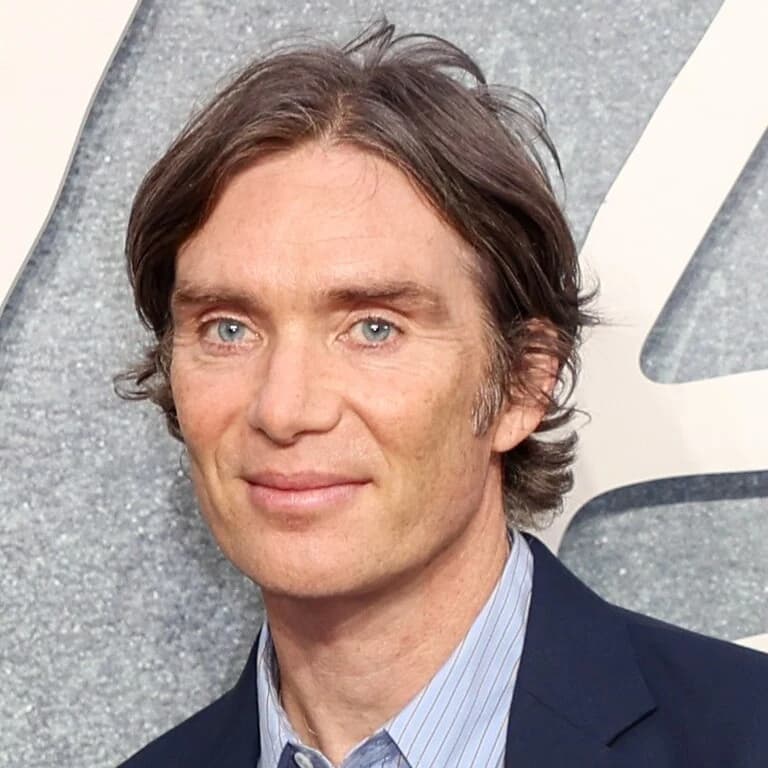
Cillian Murphy
Outer eye corners sit clearly higher than the inner corners. This is the canthal pattern most strongly associated with classical male attractiveness — alert, masculine, hunter-eye foundation. One of the most-cited examples in looksmaxxing communities.

Adam Driver
Inner and outer corners sit roughly level. Neither working visually for nor against. This is the most common tilt in the general population — a balanced starting point.

Jacob Elordi
Outer corners sit slightly below the inner corners. Often cited as the negative-tilt reference in looksmaxxing discourse — yet still a major heartthrob, which proves tilt is just one input of many.

Tom Hardy — Tilt Isn't Everything
Tom Hardy is widely cited as having "hunter eyes," but the looksmax community is mostly wrong about his canthal tilt. Look closely — his outer corners actually droop slightly below the inner corners (technically a slight negative tilt, what people call "puppy dog eyes" when his face is at rest).
What makes him read as intensely masculine is everything ELSE: heavy hooding, an extremely low and dense brow ridge, and dominant bone structure. Together those overwrite the negative tilt. If your canthal tilt isn't great, this is the path — invest in brow density, body fat low enough to define the orbital socket, and posture/frame that frames the eyes.
Cillian Murphy © Netflix (CC BY-SA 4.0). Adam Driver © Colleen Sturtevant (CC BY-SA 4.0). Jacob Elordi © JoshPopov (CC BY 4.0). Tom Hardy © Gage Skidmore (CC BY-SA 3.0).
How The Canthal Tilt Test Works
Front-facing selfie, eyes open and visible. No glasses (they obscure the canthal angle), hair off the forehead, neutral expression. Even lighting — strong shadows distort the eye line.
AI identifies your medial canthus (inner eye corner) and lateral canthus (outer corner) for both eyes, calculates the angle relative to horizontal, and corrects for slight head tilt.
Your tilt is reported in degrees with classification (positive / neutral / negative), placed on the visual scale, and an honest read on what it means for visual perception and what (if anything) you can do about it.
Tips For An Accurate Read
Canthal tilt is sensitive to head angle and lighting. Here's how to get the cleanest measurement.
Hold the phone at eye level with the camera lens pointed straight at you. Tilting up or down changes the apparent canthal angle by 1-2 degrees. Head straight, no chin lift.
Glasses obscure the lateral canthus, especially the outer corner. Hair across the brow shifts the apparent eye line. Both reduce accuracy significantly.
Window light is best. Avoid overhead lighting (creates orbital shadows that hide the lateral canthus) and direct flash (washes out the eye contour).
The classification (positive / neutral / negative) is stable across photos. The exact degree estimate can move 1-2° between shots. If your results vary widely, you're likely a borderline case — average them.
What Is Canthal Tilt, Exactly?
Canthal tilt is the angle formed by drawing a line from the medial canthus (the inner corner of your eye, near your nose) to the lateral canthus (the outer corner, near your temple) and comparing it to the horizontal.
- •Positive canthal tilt: outer corner sits higher than inner corner. Reads as alert, masculine, and youthful. Most associated with classical attractiveness in men.
- •Neutral canthal tilt: both corners roughly level. The most common in the general population. Neither helps nor hurts visually.
- •Negative canthal tilt: outer corner sits below inner corner. Reads as tired or sad even when you're neither. True negative tilt is anatomically uncommon — most who think they have it actually have weak positive or neutral.
The angle is determined by your bone structure (orbital socket position) and the attachment of the lateral canthal tendon. It's set by your early 20s and doesn't change with exercise, mewing, or massage. The only structural change is canthoplasty, a plastic surgery procedure that repositions the lateral canthus.
FAQ
How does the Canthal Tilt Test work?+
Upload or snap a clear front-facing selfie. AI estimates the angle between your medial canthus (inner eye corner) and lateral canthus (outer corner) relative to horizontal. The result is reported in degrees: positive (outer corner higher), neutral (corners roughly level), or negative (outer corner lower). The model is calibrated to anatomical reference ranges, with male ideal positive tilt around +4° to +6°.
What's a good canthal tilt for men?+
The most-cited 'ideal' positive canthal tilt for men sits between +4° and +6°. Anything from about +2° to +6° is generally considered attractive. Neutral (around 0°) is the most common and not a deficit. True negative tilt (below -2°) is anatomically uncommon — most guys who think they have negative tilt actually have weak positive or neutral.
Can I change my canthal tilt without surgery?+
Honestly, no — the underlying angle is fixed by your bone structure and the lateral canthal tendon attachment. Mewing, eye exercises, and 'tilt training' don't change it. The only structural fix is canthoplasty (a plastic surgery procedure that lifts the lateral canthus). However, the VISUAL appearance of your tilt can be improved meaningfully by brow shape, body fat, eye-area puffiness, frame choice, and lash length.
How is canthal tilt different from hunter eyes?+
Canthal tilt is one component of hunter eyes, not the whole thing. Hunter eyes typically combine three traits: positive canthal tilt + a low-set, prominent brow + a relatively short distance between the upper eyelid and brow. Positive canthal tilt is necessary but not sufficient for the hunter-eye look — you need the whole structural combination.
Is my photo stored?+
Your photo is processed for the duration of one analysis request only. We don't store, share, or train on your image. After the result is returned, the image data is discarded. The result you see is just numeric (degree estimate + classification) — no image data persists on our side.
Why did my degree estimate change between photos?+
Estimating canthal tilt from a 2D photo is sensitive to head angle, camera height, and which eye is more visible. Even small head tilts can shift the estimate by 1–2 degrees. For the most reliable read, take 2–3 photos at slightly different angles and look at the average. The classification (positive / neutral / negative) is much more stable than the exact degree.
How do I measure my canthal tilt?+
Two options. Fast way: use a free canthal tilt checker — this page is one (also called a canthal tilt detector, scanner, or tester depending on where you found it). Upload a front-facing photo and the AI estimates your angle in degrees plus the verdict. Manual way: take an eyes-level photo, draw a horizontal line through your medial canthi (inner eye corners), and measure the angle between that line and the line connecting your inner corner to your outer corner. A free protractor app on your phone works. The AI check removes the parallax errors that ruin most manual attempts and runs online, free, in under 60 seconds.
How do I get a more positive canthal tilt?+
Structurally, you don't — the underlying angle is locked to your bone structure and lateral canthal tendon. What you CAN change is how positive your tilt READS in a photo: drop body fat (eye-area puffiness flattens visible tilt), lift and define your brows with proper grooming (low, defined brows make existing tilt more visible), reduce under-eye puffiness (sleep, sodium, allergy management), and pick glasses that don't sit perfectly flat across your face. The only true structural fix is canthoplasty, a plastic surgery procedure that lifts the lateral canthus.